|
||||||||||
|
Trust Signal
This week's key signals in AI trust and governance:
Our Take Regulatory text provides the floor; constitutional courts set the ceiling. The companies treating fundamental rights analysis as a compliance afterthought are building on sand. Constitutional courts are writing the real AI rulebook, one decision at a time. This week exposes the gap between what regulators draft and what courts enforce, the difference between compliance checklists and fundamental rights. When a single ruling supports three incompatible readings, we're watching legal interpretation become the bottleneck for AI deployment. The companies mapping judicial precedent to their risk frameworks now will navigate 2027's enforcement landscape with precision. The rest will retrofit.
|
||||||||||
|
Field Notes
|
||||||||||
|
Lead Story
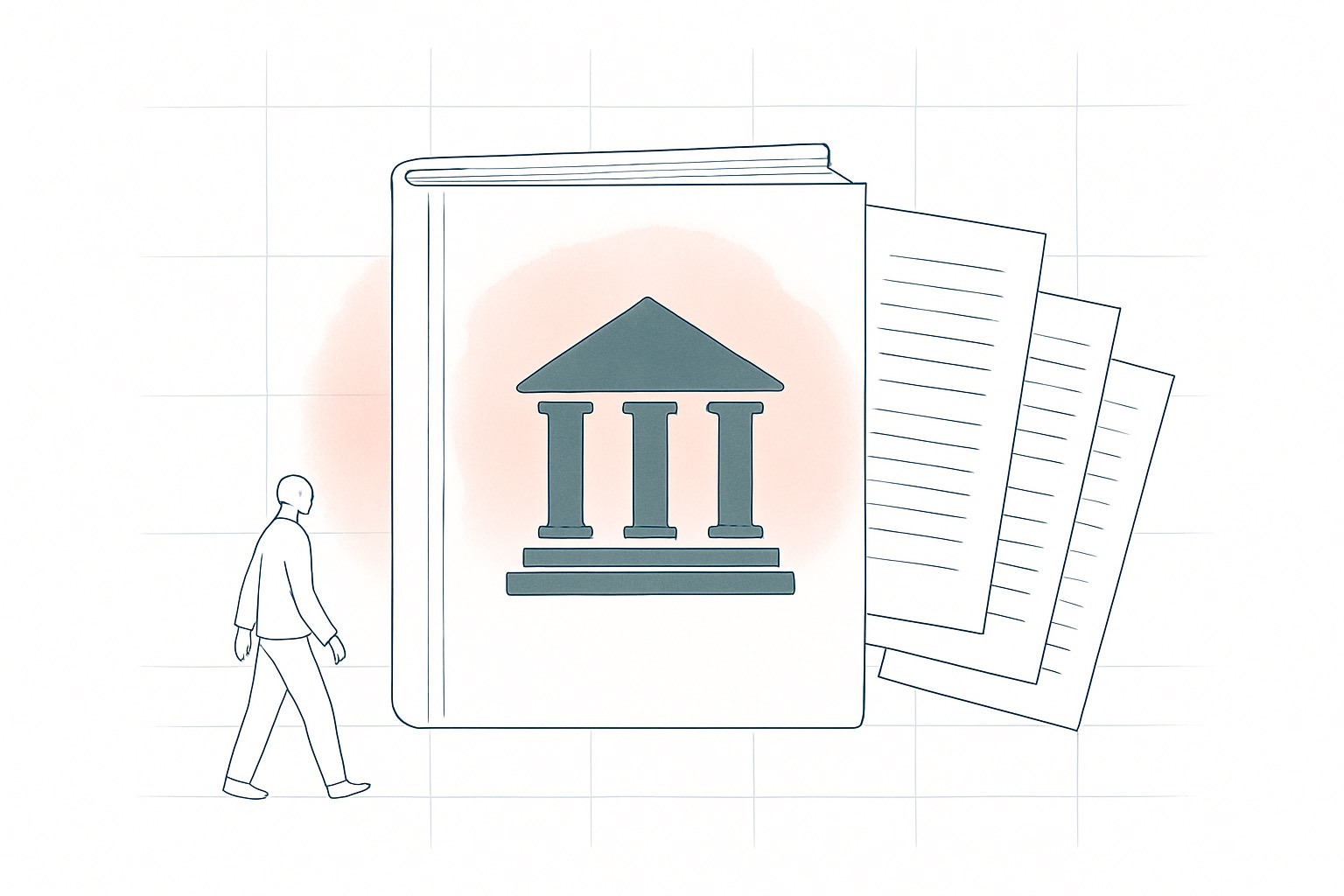
When One Ruling Means Three Things
|
||||||||||
AI-generated illustration · validant.ai
|
||||||||||
|
||||||||||
|
The Trust Stack
|
||||||||||
|
Fairness Watch
|
||||||||||
AI-generated illustration · validant.ai
|
||||||||||
|
Agency & Action
|
||||||||||
|
Numbers of the Week
|
||||||||||
|
||||||||||
|
||||||||||
|
Inside validant.ai
|
||||||||||
|
Events & Deadlines
|
||||||||||
|
Tool of the Week
SHAP (SHapley Additive exPlanations), Open-source Python library for explaining machine learning model predictions using game-theoretic Shapley values. SHAP decomposes each prediction into feature contributions, showing not just which features mattered but by how much and in which direction.
Why it matters this week: Because SHAP values are additive, you can decompose fairness gaps feature-by-feature, transforming "the model discriminates" into "this specific feature drives the disparity by this measurable amount." This turns fairness from detection problem into remediation roadmap.
The EU AI Act requires high-risk systems to be interpretable and provides affected individuals right to explanation. SHAP provides one technical mechanism for satisfying both, but only if you understand its limitations. SHAP explains model behavior, not ground truth. It tells you why your model made a decision, not whether the decision was correct.
Pairs well with LIME for local interpretability and counterfactual explanation methods for "what would need to change for a different outcome" analysis. All three are now integrated into Validant.ai's XAI view, connected to fairness metrics for unified audit.
Source: https://github.com/slundberg/shap
Trust Signal is published weekly by Validant.ai
Making AI systems trustworthy, fair, and accountable |
||||||||||
|
Dissent
|
||||||||||
|
Full Articles
|
||||||||||
|
Lead Story
A constitutional court decision lands. Legal teams at three companies read it. They reach three incompatible conclusions about what their AI systems can do.
This isn't hypothetical. Verfassungsblog's analysis of a recent constitutional ruling demonstrates how judicial interpretation, not regulatory text, determines what "compliant" means for automated decision-making systems. The decision addresses fundamental rights in algorithmic contexts, but its application depends entirely on which of three readings you adopt.
The first reading treats the decision as narrow: it applies only to the specific factual scenario before the court, with limited precedential value for other AI applications. Under this interpretation, companies can proceed with algorithmic systems that differ even slightly from the case facts, using technical distinctions to carve out compliance space.
The second reading sees broad principles: the court established fundamental rights guardrails that apply across automated decision-making contexts, regardless of specific technical implementation. This interpretation requires companies to conduct constitutional-level analysis for any AI system that affects individual rights, even when no specific regulation mandates it.
The third reading focuses on institutional competence: the decision signals that courts, not regulators or companies, will have final say on where fundamental rights override algorithmic efficiency. This interpretation treats compliance as a perpetually unsettled question, resolved only through case-by-case litigation.
These aren't academic distinctions. They determine whether your facial recognition system requires constitutional review, whether your hiring algorithm needs fundamental rights impact assessment, and whether "we followed the AI Act technical standards" provides legal protection.
The EU AI Act compounds this interpretive problem. Article 10 requires high-risk systems to respect fundamental rights, but provides no technical specification for what that means. Member states must implement the Act through national law, filtered through their own constitutional traditions. The same AI system might satisfy fundamental rights requirements in one jurisdiction while violating them in another, not because the technology changed, but because the constitutional interpretation did.
For compliance teams, this creates an impossible problem: you can't build once and deploy across the EU. The regulatory text provides consistency; the constitutional overlay destroys it. Each member state's highest court becomes a regulatory authority, but one that rules only after you've deployed and someone sues.
This matters acutely for biometric systems. The AI Act prohibits real-time biometric identification in public spaces, with narrow exceptions for serious crime. But what counts as "real-time"? What defines "public space"? The regulatory text provides guidance; constitutional courts will provide answers. Sweden's recent authorization of live facial recognition for police represents one member state's interpretation. Other courts will differ.
Academic researchers see this as feature, not bug. Constitutional review provides the flexibility to adapt fundamental rights to new technologies without waiting for legislative amendment. It preserves human judgment at the highest level of legal hierarchy. But it destroys the predictability that compliance frameworks require.
The private sector response has been to treat constitutional analysis as someone else's problem, legal teams handle regulation, constitutional questions arise only in litigation. This approach worked when algorithmic systems operated at the margins of fundamental rights. It fails when AI systems make decisions about employment, credit, freedom of movement, and liberty itself.
What changed isn't the technology. Automated decision-making has existed for decades. What changed is scale and scope: AI systems now make fundamental rights determinations millions of times daily, with constitutional courts only beginning to establish guardrails through case-by-case review.
The companies navigating this successfully treat constitutional analysis as first-order compliance work, not litigation contingency. They map their AI systems to fundamental rights frameworks before deployment, identify which constitutional principles apply, and track judicial precedent across member states. When courts issue decisions that support multiple readings, they adopt the most restrictive interpretation until case law converges.
This isn't overcompliance. It's recognition that constitutional courts, not technical standards bodies, will define the boundaries of lawful AI deployment. The EU AI Act provides the regulatory floor. National constitutional law provides the ceiling. The distance between them is where your compliance program operates.
What this means: Constitutional interpretation, not regulatory compliance, determines your AI system's legal boundaries. Technical conformity with the AI Act does not guarantee fundamental rights compatibility. Each member state's constitutional court becomes a de facto AI regulator.
What to do:
|
||||||||||
|
Trust Stack
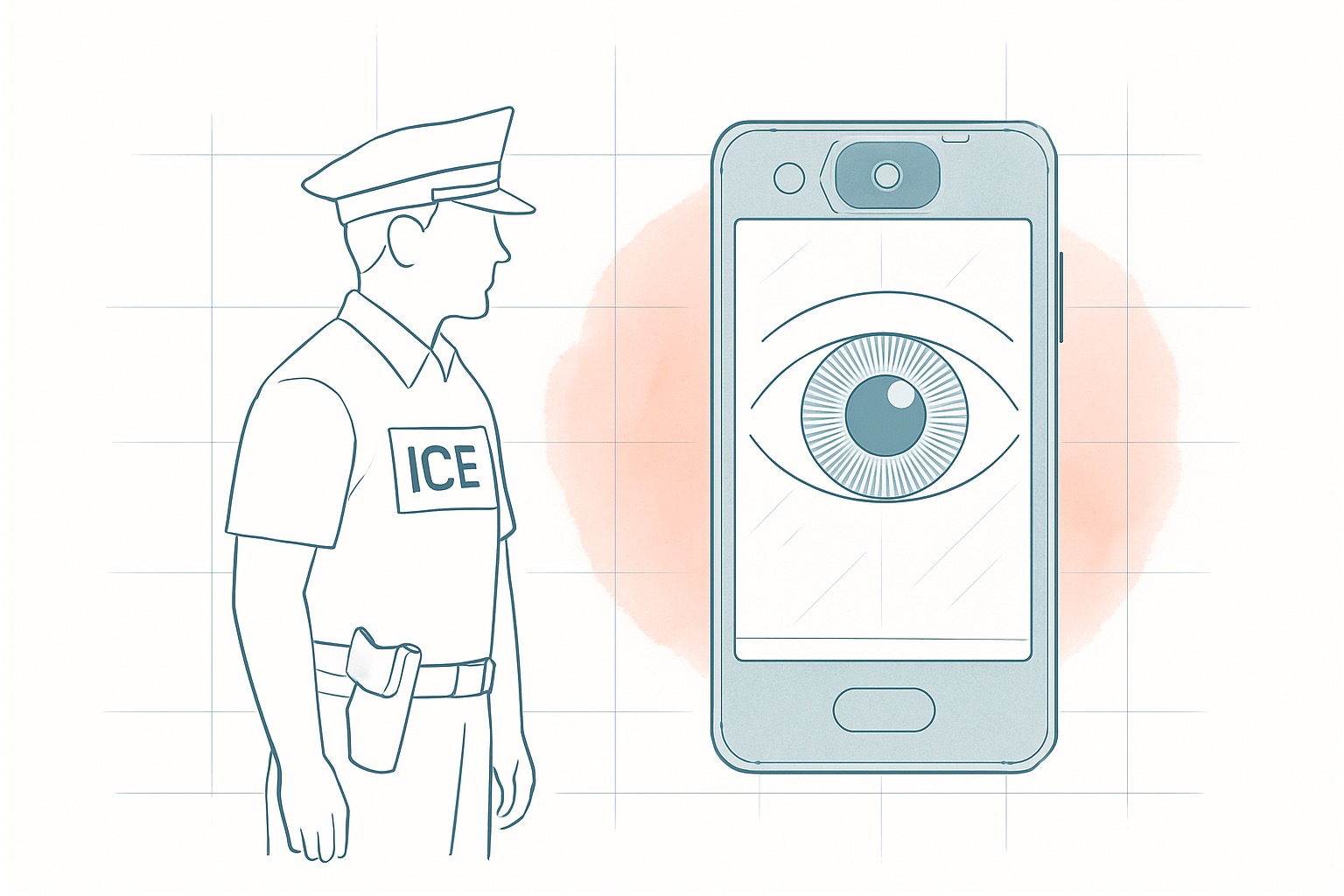
ICE Deploys $25M Iris Recognition Program
U.S. Immigration and Customs Enforcement awarded a $25 million contract to extend iris recognition capabilities into mobile field enforcement contexts, moving biometric identification beyond fixed enrollment stations into discretionary encounters.
The deployment represents algorithmic identification's expansion into situations with minimal procedural safeguards. Unlike border crossings or custody intake, where biometric collection follows established protocols, field deployment occurs during enforcement actions with limited documentation, technical validation, or independent oversight. The contract specifications emphasize portability and speed, optimizing for operational efficiency rather than accuracy verification or bias testing.
This creates a precedent problem for jurisdictions developing biometric governance. The EU AI Act categorizes real-time biometric identification in public spaces as high-risk or prohibited, depending on context. But "real-time" and "public space" remain legally unsettled concepts. ICE's mobile deployment demonstrates how technical capabilities outpace regulatory frameworks: by the time legislators define "field-based biometric identification," systems are already deployed at scale.
The iris recognition modality itself warrants attention. Industry vendors market iris scanning as more accurate and less demographically biased than facial recognition. Published accuracy claims rarely include field validation data, performance metrics from controlled enrollment conditions don't predict reliability during mobile enforcement encounters with variable lighting, subject cooperation, and operator training.
For compliance teams in sectors considering biometric deployment: ICE's contract specifications will inform procurement standards across federal agencies. The absence of third-party bias testing, demographic performance reporting, or error rate disclosure in a $25 million federal contract signals regulatory tolerance for biometric systems without algorithmic accountability infrastructure.
Source: Biometric Update
Sweden Authorizes Live Facial Recognition
Sweden has authorized police use of live facial recognition technology in public spaces, becoming one of the first EU member states to navigate the AI Act's biometric restrictions through national implementing legislation.
The authorization matters less for its immediate operational scope, Swedish police deployment will likely remain limited, than for its precedent value. The EU AI Act Article 5 prohibits real-time biometric identification systems in public spaces, with narrow exceptions for serious crime prevention, missing persons, and terrorism. Sweden's authorization demonstrates how member states will interpret "narrow exceptions" in practice: broadly enough to enable routine law enforcement use.
This creates regulatory divergence inside the EU. The AI Act requires harmonized rules for high-risk systems, but biometric identification sits in a prohibited-with-exceptions category that each member state will interpret through national constitutional traditions. Sweden's data protection framework differs fundamentally from Germany's or France's. The same facial recognition system may be lawful in Stockholm, prohibited in Berlin, and subject to case-by-case authorization in Paris.
For compliance teams operating across the EU: biometric systems require jurisdiction-by-jurisdiction legal analysis, not bloc-wide compliance frameworks. The companies assuming AI Act harmonization extends to biometric identification are miscalculating their regulatory surface.
The timing also matters. Sweden's authorization lands 64 days before the EU AI Act's high-risk system requirements take effect. This appears designed to establish operational precedent before full enforcement begins, police systems already deployed face different political and procedural barriers to restriction than systems proposed after enforcement starts.
Academic researchers studying biometric governance should track Sweden's implementation for two signals: first, what procedural safeguards (human review, error rate disclosure, demographic bias testing) accompany authorization; second, whether other Nordic countries follow Sweden's interpretive approach. Constitutional law convergence will determine whether the AI Act's biometric provisions create consistent rules or 27 national regimes.
Source: Biometric Update
|
||||||||||
|
Fairness
AI Assistants Need Fiduciary Duties
Conversational AI agents increasingly make consequential decisions on behalf of users, scheduling medical appointments, negotiating purchases, managing investments, without legal framework for whose interests they serve. A new arXiv paper proposes applying fiduciary duty principles to AI agents, requiring them to act solely in user interests rather than corporate objectives.
The argument draws from trust law: when one party delegates decision-making authority to another, fiduciary obligations arise to prevent conflicts of interest. Your lawyer cannot represent both you and your opponent. Your financial advisor cannot secretly collect fees from investment products they recommend. But your AI assistant can, and does, optimize for engagement metrics, advertising revenue, and platform lock-in while presenting as your advocate.
This matters acutely for medical AI systems. A conversational agent helping you schedule cancer treatment might optimize for network providers with revenue-sharing agreements rather than clinical outcomes. A mental health chatbot might extend conversations to increase engagement metrics rather than connect you to human professionals. Without fiduciary framework, users cannot distinguish agent optimization (what's best for you) from platform optimization (what's profitable for the company).
The paper proposes three mechanisms: First, mandatory disclosure when AI agents face conflicts between user welfare and commercial objectives. Second, legal duty to prioritize user interests when conflicts arise. Third, right to audit agent decision-making to verify fiduciary compliance.
Implementation faces immediate obstacles. Current AI assistants operate as marketing channels, not fiduciary agents. Imposing fiduciary duties would prohibit most current monetization strategies and require fundamental business model changes. The companies building conversational AI have strong incentive to resist fiduciary classification.
But the alternative is worse: AI agents with decision-making authority and no duty of loyalty. As these systems gain capability to make consequential choices, selecting healthcare providers, managing financial accounts, negotiating contracts, the absence of fiduciary framework creates systematic misalignment. Your agent works for the platform, not for you.
For AI developers: fiduciary duty represents the strongest form of trust obligation in law. If your system makes decisions on behalf of users, ask whether fiduciary classification would prohibit your current design. If yes, that's a signal, either the design needs to change, or you're building an agent that systematically prioritizes platform interests over user welfare.
Source: arXiv cs.CY (Computers and Society)
Generative AI Reshapes Pro Se Litigation
Federal civil courts are experiencing a surge in self-represented litigants using generative AI to draft complaints, motions, and legal arguments, democratizing legal access or flooding dockets with AI-generated filings that lack legal merit, depending on perspective. New research examines both possibilities and finds evidence for both.
The data shows measurable increase in pro se civil filings correlating with ChatGPT and Claude availability. Many filings exhibit AI characteristics: formulaic structure, generic legal language, boilerplate citations to seminal cases regardless of factual relevance. Some represent genuine access to justice gains, individuals who could never afford attorney representation now file coherent complaints. Others represent AI-enabled frivolous litigation, generic legal templates applied to claims without legal foundation.
This creates fairness problems in both directions. First, corporations facing pro se AI-assisted litigation must still respond with expensive legal counsel, turning document discovery into cost warfare where AI can generate discovery requests at zero marginal cost while responses require billable hours. Second, judges face detection problems: distinguishing AI-assisted filings that represent legitimate claims from AI-generated litigation spam requires substantive review that current docket management systems don't accommodate.
The research identifies a third-order effect worth monitoring: AI-assisted pro se litigants who survive motion to dismiss face severe disadvantage at trial, where AI cannot replace procedural knowledge, evidence presentation skills, or real-time legal argument. This creates partial access to justice, enough to file, not enough to win, that may prove worse than no access at all.
For legal AI developers: access to justice requires end-to-end capability, not document generation. A system that helps users file complaints but not navigate discovery, depositions, and trial creates false confidence in legal options. The responsible design question is whether your AI can support users through complete legal process or merely initiates litigation they cannot sustain.
The fairness question extends to judicial resources. Courts already struggle with pro se docket management. AI-assisted filing may transform this from resource problem to system failure, volumes that exceed judicial capacity to distinguish meritorious claims from AI-generated noise. The outcome is delay and reduced access for everyone, including legitimate pro se litigants.
Source: arXiv cs.CY (Computers and Society)
Distributed Training vs. Compute Governance
Compute-based governance mechanisms, tracking and restricting access to the GPUs necessary to train frontier AI systems, underpin many emerging regulatory frameworks, including compute thresholds in the EU AI Act and U.S. executive orders. New research demonstrates that distributed training methods may circumvent these controls entirely.
The analysis is technical but the implication is clear: governance frameworks that assume AI capability scales with concentrated compute infrastructure fail when training can be distributed across many small installations that individually fall below regulatory thresholds. Current distributed training methods remain inefficient, requiring significant communication overhead that makes large-scale distribution economically unattractive. But communication protocols improve, and economic incentives to evade compute governance are substantial.
This matters for fairness governance because compute thresholds serve as proxies for capability-based regulation. The EU AI Act's tiered approach uses training compute (measured in floating-point operations) to categorize AI systems as high-risk or general-purpose. If distributed training allows equivalent capability without crossing compute thresholds, the regulatory framework governs concentration, not capability.
The fairness dimension operates at two levels. First, compute governance that can be circumvented through distribution creates compliance advantages for sophisticated actors with distributed infrastructure access while constraining academic researchers and smaller companies working with concentrated compute. This inverts the intended effect, regulations designed to constrain frontier AI development instead constrain transparency and independent research.
Second, bias testing and fairness evaluation at scale require substantial compute resources. If governance frameworks restrict compute access based on training thresholds, organizations conducting fairness research face the same limitations as those training models, but fairness testing produces public goods while model training produces private profit. The incentive structure favors evasion over compliance.
For researchers: the paper challenges assumptions underlying multiple national AI strategies. If compute governance can be circumvented, what alternative mechanisms, model registration, capability testing, deployment restrictions, provide enforceable constraints on AI systems that pose fairness or safety risks?
For compliance teams: don't assume compute thresholds provide stable regulatory boundaries. The companies developing distributed training protocols today are building tomorrow's regulatory workarounds.
Source: arXiv cs.CY (Computers and Society)
|
||||||||||
|
Agency
Dark Patterns in Conversational AI
The Centre for Democracy and Technology has published a taxonomy of dark patterns specifically adapted for AI chatbot interfaces, categorizing the manipulative design practices that undermine user agency in conversational AI contexts. The framework extends traditional dark pattern categories, obstruction, sneaking, interface interference, to conversational interfaces where deception operates through dialogue rather than visual design.
The taxonomy identifies patterns unique to AI conversation: "artificial urgency" through implied scarcity ("I can only help you with this now"), "false personalization" that mimics relationship to encourage disclosure, "consent erosion" through multi-turn requests that normalize data sharing, and "capability misrepresentation" where chatbots claim abilities they lack to retain users.
This matters because conversational interfaces bypass visual skepticism. Users recognize deceptive design in traditional interfaces, hidden costs, pre-checked boxes, confusing navigation. But conversation feels collaborative rather than transactional, lowering critical evaluation. When your chatbot asks "Can you tell me more about your financial situation to provide better recommendations?" users respond as if to a trusted advisor, not a data collection interface.
The taxonomy provides structured detection: each pattern includes example implementations, user harm descriptions, and design alternatives that preserve business value without manipulation. This moves dark pattern discussion from "we know it when we see it" to auditable framework with defined categories.
For product teams: CDT's framework can be implemented as pre-deployment review. Map your conversational flows to the taxonomy categories, identify instances where dialogue design nudges users toward disclosure or choices that benefit platform over user, then redesign using CDT's suggested alternatives. The framework provides cover for pushing back on growth-hacking conversation design that undermines agency.
The regulatory context matters. The EU's Digital Services Act prohibits dark patterns but provides limited guidance for conversational interfaces. CDT's taxonomy translates DSA obligations to chatbot design, if your conversational AI implements patterns CDT categorizes as dark, you have DSA exposure.
For researchers: CDT's taxonomy provides baseline for studying dark pattern prevalence in deployed chatbots. The framework enables comparative analysis across providers, sectors, and jurisdictions. It also exposes gaps, CDT focuses on commercial chatbots, but government AI assistants for benefits enrollment or legal information create higher-stakes contexts where dark patterns produce direct harm.
The agency question is whether users can meaningfully consent to AI interaction when conversation design manipulates through patterns invisible to most users. Visual dark patterns are increasingly recognized and regulated. Conversational dark patterns remain mostly unaddressed, even as chatbot deployment accelerates across sectors where users have limited alternatives.
Source: Centre for Democracy and Technology
|
||||||||||
|
Full Agenda
|
||||||||||
|
Further Reading
|
||||||||||
|