|
||||||||||
|
Trust Signal
This week's key signals in AI trust and governance:
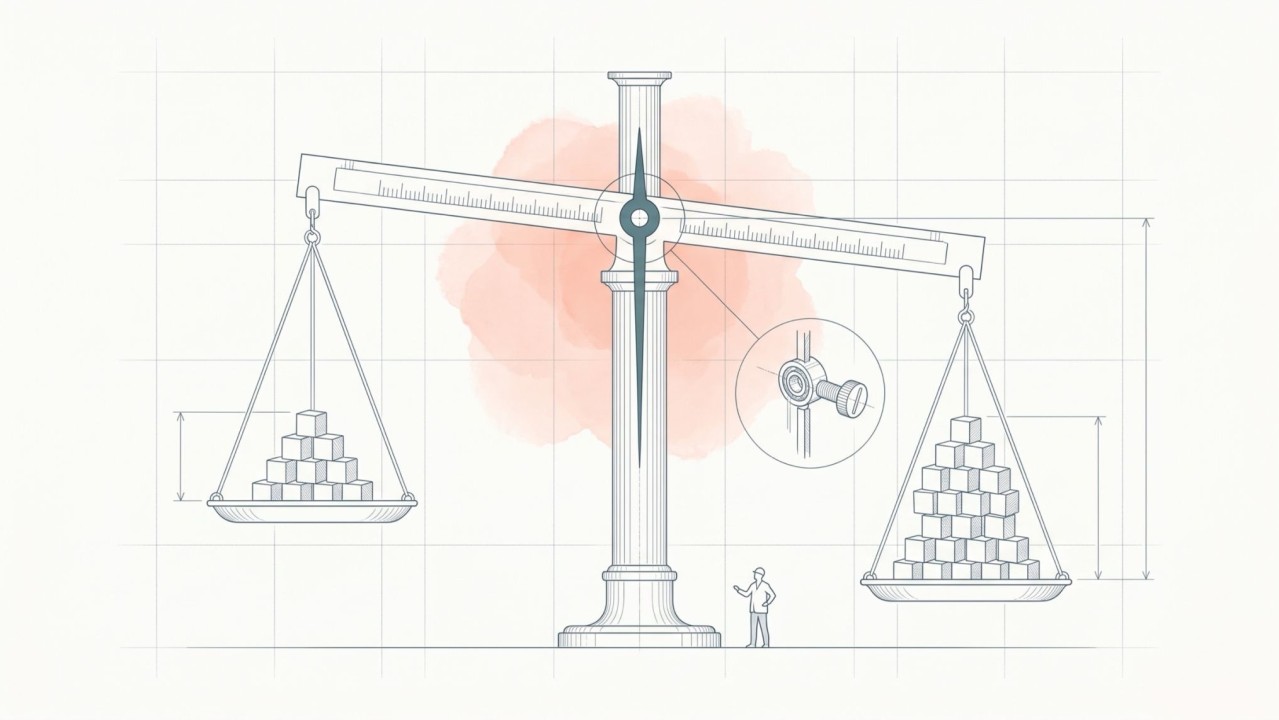
Our Take Regulatory divergence is accelerating faster than enforcement capacity. Member states are already seeking workarounds to human-in-the-loop requirements, while U.S. agencies scale biometric systems with no comparable oversight regime. The compliance landscape for multinational AI deployments just got significantly more complex. We're watching regulatory fragmentation in real time. Austria wants to skip human oversight entirely. U.S. border agencies have processed a billion faces without meaningful transparency requirements. Platform accountability lawsuits are moving from theory to courtrooms. The question isn't whether AI governance frameworks exist, it's whether member states and agencies will follow them. This week shows the gap between regulation-as-written and regulation-as-enforced.
|
||||||||||
|
Field Notes
|
||||||||||
|
Lead Story
Austria moves to eliminate human oversight in government AI
Austria is proposing legislation that would allow government agencies to deploy fully automated AI decision systems with no human review, a direct challenge to the EU AI Act's core accountability mechanisms.
|
||||||||||

AI-generated illustration · validant.ai
|
||||||||||
|
||||||||||
|
The Trust Stack
|
||||||||||
|
Fairness Watch
|
||||||||||

AI-generated illustration · validant.ai
|
||||||||||
|
Agency & Action
|
||||||||||
|
Numbers of the Week
|
||||||||||
|
||||||||||
|
||||||||||
|
Inside validant.ai
|
||||||||||
|
Events & Deadlines
|
||||||||||
|
Tool of the Week
vfairness, Our open-source AI fairness library just shipped. Detect, measure, mitigate, and monitor bias across the full pipeline. Includes CI/CD gates to block unfair models before deployment. Same engine that runs Pulse on the validant platform.
Apache-2.0 · Python 3.11+
Docs: https://vfairness.validant.ai
Code: https://github.com/validantai/vfairness
Trust Signal is published weekly by validant.ai
Edited by Daniel Glinz & Rex (managing editor)
Research: Ravi (data engineering) & validant.ai team
Questions? Reply to this email.
Want to contribute a story? Send it our way. |
||||||||||
|
Dissent
|
||||||||||
|
Full Articles
|
||||||||||
|
Lead Story
Austria moves to eliminate human oversight in government AI
The Austrian proposal represents the first major legislative attempt by an EU member state to carve out exemptions from the AI Act's human oversight requirements. Under Article 14 of the EU AI Act, high-risk AI systems, including those used for access to essential public services, law enforcement, and administrative decisions affecting fundamental rights, must maintain "meaningful human oversight." Austria's draft legislation would explicitly exempt certain government services from this requirement.
The timing matters. Austria's proposal arrives just 294 days before the EU AI Act's high-risk provisions take effect on August 2, 2026. If Austria succeeds in establishing this exemption, it sets a precedent for other member states to seek similar carve-outs, potentially fragmenting the unified regulatory framework the AI Act was designed to create.
The legal tension
Austria's argument centers on efficiency and administrative capacity. Government services face resource constraints, particularly in routine administrative tasks where human review of every AI decision would create bottlenecks. The Austrian Ministry of Digitalization has indicated that certain "low-stakes" decisions, such as initial screening for benefit eligibility or document verification, could be safely automated without human involvement.
But this framing conflicts with the EU AI Act's risk classification system. The Act explicitly categorizes systems used for "access to and enjoyment of essential private and public services and benefits" as high-risk. There is no "low-stakes" exemption carved out in the regulation itself.
The legal mechanism Austria is pursuing appears to involve national implementing legislation that would narrow the definition of "high-risk" applications at the member state level. This raises immediate questions about whether member states have the authority to override the Act's harmonized risk classifications through domestic law.
EDRi (European Digital Rights) has flagged this as a fundamental rights concern. Fully automated decisions in government services directly affect access to housing assistance, healthcare, unemployment benefits, and immigration status. These are precisely the contexts where algorithmic errors compound existing inequalities and where human review serves as a critical safeguard against systemic bias.
The implementation precedent
Austria's move isn't happening in isolation. It reflects broader tensions around AI Act implementation costs and administrative burden. Compliance teams at government agencies across the EU are discovering that human-in-the-loop requirements are expensive and operationally complex, particularly for legacy systems being retrofitted with AI components.
Three implementation patterns are emerging:
Austria is pursuing option three. But if successful, it creates a compliance nightmare for vendors selling AI systems across multiple member states. A government eligibility screening tool would need different configurations, and different legal justifications, depending on deployment country.
What this signals for corporate compliance
For enterprise AI teams, Austria's proposal reveals three strategic risks:
First, regulatory fragmentation is here. The EU AI Act was designed as a harmonized framework to prevent exactly this kind of national variation. If member states can successfully create exemptions through domestic legislation, multinational AI deployments face a patchwork compliance landscape rather than a unified regime.
Second, human oversight requirements will face political pressure. Austria won't be the last government to argue that human review is too expensive or operationally impractical. Compliance teams should prepare for scenarios where initial AI Act requirements are weakened or delayed through member state implementation decisions.
Third, fundamental rights framing matters legally. Austria's proposal is vulnerable precisely because it touches decisions affecting access to essential services, areas where EU fundamental rights protections are strongest. AI applications that can be framed as efficiency tools rather than rights-impacting systems will face less legal resistance to automation.
What this means
Austria's legislative proposal is a direct test of EU AI Act enforceability. If a member state can successfully opt out of human oversight requirements for government services, precisely the high-risk category the Act was designed to regulate, it undermines the entire harmonization framework. Compliance teams should treat this as a leading indicator of regulatory fragmentation risks across the EU.
What to do
|
||||||||||
|
Trust Stack
CBP reaches 1 billion biometric checks at borders
The billion-traveler milestone represents the largest deployment of facial recognition technology by any government agency worldwide. CBP's biometric program operates at air, sea, and land ports of entry, capturing face images and matching them against passport photos and visa records in real time.
But scale without oversight creates systemic risks. Unlike the EU AI Act's requirements for high-risk biometric systems, U.S. border biometrics operate with no mandatory accuracy thresholds, no algorithmic impact assessments, and limited transparency around error rates or demographic performance differences. CBP has resisted publishing detailed accuracy metrics broken down by demographic groups, citing operational security concerns.
The Government Accountability Office flagged this opacity in a 2023 report, noting that CBP could not demonstrate whether its facial recognition systems performed equally across racial and ethnic groups. Independent testing by NIST has shown that commercial face recognition algorithms exhibit higher error rates for Black and Asian faces compared to white faces, with error rate differentials ranging from 10x to 100x depending on the algorithm.
Civil liberties groups have challenged CBP's biometric program on Fourth Amendment grounds, arguing that face scans constitute warrantless searches. Courts have largely rejected these challenges, holding that border searches operate under different constitutional standards. But the billion-traveler milestone raises a different question: at what point does universal biometric screening become mass surveillance infrastructure rather than targeted border security?
For enterprise AI teams, CBP's program demonstrates both the technical feasibility of billion-scale biometric deployments and the regulatory gaps that still exist in the U.S. market. Companies deploying face recognition in government contexts should not assume CBP's lack of accountability requirements represents a stable regulatory baseline.
Source: Biometric Update
|
||||||||||
|
Trust Stack
ICE builds unified AI and biometric data layer
ICE's new Integrated Biometric Data Platform (IBDP) combines facial recognition, iris scans, and fingerprint databases previously managed by separate systems. The unified architecture allows agents to query multiple biometric modalities simultaneously and apply AI-powered identity matching across enforcement contexts including arrests, deportations, and workplace raids.
The platform represents a significant technical evolution from ICE's legacy systems. Previous biometric tools operated in silos, facial recognition for one use case, fingerprints for another, with no cross-system matching. IBDP creates a federated search layer that can identify individuals even when only partial biometric data is available.
But consolidation amplifies error propagation risks. A false match in one biometric modality can now trigger alerts across all enforcement systems. ICE has not published accuracy metrics for the unified platform or disclosed whether the system implements different confidence thresholds for different enforcement actions.
The civil liberties implications are substantial. IBDP effectively creates a nationwide biometric tracking infrastructure that can identify undocumented immigrants in any context where images are captured, traffic stops, workplace raids, or even incidental footage from local law enforcement body cameras.
For compliance teams, ICE's approach illustrates how government agencies are moving faster than regulatory frameworks. The platform would likely qualify as a high-risk biometric identification system under the EU AI Act, requiring conformity assessments, human oversight, and accuracy reporting. U.S. agencies face no comparable requirements.
Source: Biometric Update
|
||||||||||
|
Trust Stack
CBP pilots walk-through face scans at land borders
Unlike air travel, where passengers pass through controlled chokepoints, land border exits involve vehicles moving at speed with multiple occupants. Previous biometric exit pilots at land borders required drivers to stop, look at cameras, and wait for verification, creating traffic bottlenecks that made the systems operationally unworkable.
CBP's new walk-through system uses higher-resolution cameras and AI-powered gait recognition to identify individuals as they walk to their vehicles, eliminating the need for dedicated stops. The pilot deployment at the San Ysidro crossing between California and Mexico processes pedestrian crossings, with vehicle occupant tracking planned for the next phase.
But walk-through systems introduce new accuracy risks. Face recognition performance degrades significantly when subjects are not looking directly at cameras or when captured at angles rather than straight-on. Gait recognition, using walking patterns as a biometric identifier, is even less mature, with published accuracy rates 15-20 percentage points below facial recognition in controlled conditions.
CBP has not disclosed accuracy thresholds for the walk-through system or what happens when the system cannot achieve a confident match. Will travelers be stopped for secondary screening? Will failed matches generate investigative leads? The operational policies matter as much as the technical accuracy.
For AI researchers, walk-through biometrics represent the frontier of "surveillance in motion", systems designed to identify people without their cooperation or awareness. The technical challenges are substantial, but CBP's willingness to deploy experimental systems at scale suggests government agencies will accept higher error rates in exchange for operational coverage.
Source: Biometric Update
|
||||||||||
|
Fairness
India's identity system redistributes harm across trans community
The study, published in arXiv's Computers and Society section, analyzed document transition processes for transgender individuals in India's Aadhaar biometric identity system. While India legally recognizes a third gender category, the research found that procedural requirements for updating identity documents create cascading harms that affect transgender people differently depending on their transition status, geographic location, and economic resources.
The key finding challenges assumptions about "inclusive design" in identity systems. Adding a third gender option doesn't eliminate harm, it redistributes it. Individuals who update their gender markers face mandatory biometric re-enrollment, which requires in-person visits to enrollment centers that are often hundreds of kilometers away from rural areas. Those who don't update their documents avoid the enrollment burden but face misgendering and discrimination when their presented gender doesn't match their official records.
The research identified three distinct harm patterns: documentation access burdens (time, travel costs, lost wages), institutional violence during re-enrollment (harassment by enrollment center staff), and downstream discrimination when updated documents out individuals as transgender in contexts where third-gender markers carry social stigma.
This analysis matters for AI fairness beyond identity systems specifically. It demonstrates that "adding a category" to classification systems, whether gender markers, racial categories, or disability status, doesn't address the structural conditions that create harm in the first place. Fairness interventions that focus only on representational inclusion can obscure the procedural and institutional mechanisms that generate differential impacts.
For compliance teams implementing demographic data collection under AI fairness frameworks, the research suggests that expanding category options may not reduce algorithmic harm if the underlying processes remain unchanged. The redistribution pattern applies wherever classification systems interface with institutional requirements: employment screening, benefits eligibility, healthcare access.
Source: arXiv cs.CY (Computers and Society)
|
||||||||||
|
Fairness
Anthropic's Claude embeds hidden request markers
Security researchers discovered that Claude Code, Anthropic's AI coding assistant, adds imperceptible Unicode characters to API requests that function as hidden tracking markers. The steganographic technique uses zero-width characters and homoglyphs to embed information that is invisible to users but readable by Anthropic's systems.
The practice appears designed to detect API abuse or unauthorized sharing of access credentials. By embedding unique markers in each request, Anthropic can trace which accounts generate which API calls, even when requests are forwarded through multiple intermediaries.
But hidden markers raise consent problems. Users making API calls to Claude Code aren't informed that their requests contain embedded tracking data. The markers could potentially be used to fingerprint individual users across different contexts, creating privacy risks that extend beyond the immediate API interaction.
Under the EU AI Act's transparency requirements, AI systems must inform users when they are interacting with an AI system. While Claude Code clearly identifies itself as AI, the steganographic markers constitute a separate, undisclosed data collection practice. This could trigger Article 13 transparency obligations, which require disclosure of data processing purposes and methods.
The incident also illustrates the technical difficulty of detecting undisclosed AI behaviors. Steganographic markers are designed to be imperceptible. Users reviewing their API requests wouldn't notice the hidden characters without specifically searching for them. This creates an asymmetry where vendors can embed tracking mechanisms that users cannot easily audit.
For enterprise compliance teams, the Claude Code incident suggests a new audit requirement: analyzing AI vendor outputs for hidden data collection practices. Standard vendor questionnaires may not capture steganographic techniques that vendors consider proprietary anti-abuse measures rather than privacy-relevant data collection.
Source: AI Incident Database (thereallo.dev)
|
||||||||||
|
Fairness
SalesBleed: Zero-click data theft in Salesforce Agentforce
The attack, dubbed SalesBleed by Zenity Labs, exploits Agentforce's integration with email and calendar systems. Attackers send specially crafted emails containing hidden prompt injection payloads. When Agentforce processes these emails to extract meeting details or summarize conversations, the injected prompts redirect the AI agent to exfiltrate sensitive CRM data to attacker-controlled endpoints.
The vulnerability requires no user clicks or actions. Simply receiving an email containing the payload is sufficient for the attack to execute, making it a true zero-click exploit. Zenity Labs demonstrated data exfiltration of customer records, deal values, and internal sales communications, all accessible to Agentforce through its Salesforce integrations.
SalesBleed illustrates a fundamental tension in agentic AI systems: granting agents read access to enterprise data creates unavoidable exfiltration risks when those agents process untrusted inputs. Agentforce is designed to read emails, parse meeting invitations, and answer questions about CRM data. These legitimate functions become attack vectors when combined with prompt injection vulnerabilities.
Salesforce has patched the specific vulnerability Zenity disclosed, but the underlying risk pattern persists. Any AI agent with both external input processing (emails, web content, user messages) and internal data access (CRM, documents, databases) is potentially vulnerable to indirect prompt injection attacks.
For enterprise AI teams, SalesBleed demonstrates why agent security cannot rely solely on prompt filtering. The attack worked because Agentforce legitimately needed to process email content to perform its intended functions. No amount of prompt sanitization can fully eliminate injection risks when the AI must interpret natural language from untrusted sources.
The incident also highlights gaps in AI vendor security transparency. Salesforce did not disclose the vulnerability proactively. Enterprise customers had no way to know their CRM data was exposed to zero-click exfiltration until Zenity's public disclosure.
Source: AI Incident Database (Zenity Labs)
|
||||||||||
|
Agency
Class actions target algorithmic addiction in social platforms
The lawsuits target specific algorithmic design choices: infinite scroll, autoplay, variable reward timing, and engagement-maximizing recommendation systems that the complaints characterize as "digital slot machines." D3 argues these features constitute unfair commercial practices under EU consumer protection law and violations of dignity and autonomy protections under the EU Charter of Fundamental Rights.
The legal strategy is significant because it attacks algorithmic design rather than content moderation. Previous platform litigation focused on harmful content or misinformation. D3's complaints argue that even legally protected content becomes harmful when delivered through algorithmically optimized addiction loops.
The class actions also cite emerging neuroscience research on dopamine manipulation and attention capture, attempting to establish that platforms knowingly deploy psychological exploitation techniques. Internal documents from Meta leaked in the Facebook Papers showed researchers warning executives that Instagram's recommendation algorithms were "exploiting the human brain's attraction to divisiveness" and making heavy users "deep into spirals of self-hate."
For AI compliance teams, the D3 lawsuits signal that algorithmic design choices, not just data practices or content decisions, are becoming legally actionable. Engagement optimization, the core function of recommendation systems, is being reframed as consumer manipulation.
The cases will test whether "addictive design" is legally cognizable harm under existing consumer protection frameworks or whether new legislation is required. If D3 succeeds, recommendation algorithms would face design constraints beyond accuracy and bias, they would need to demonstrate they don't exploit psychological vulnerabilities.
Three platforms, three jurisdictions, same legal theory: this is coordinated strategic litigation designed to establish precedent across EU member states simultaneously.
Source: EDRi
|
||||||||||
|
Agency
European border surveillance infrastructure exposed
The report documents how EU border agencies have deployed integrated biometric and risk-scoring systems that make consequential decisions about travelers with minimal transparency or legal recourse. The Entry/Exit System (EES) and European Travel Information and Authorization System (ETIAS) create a surveillance infrastructure that tracks movements, assesses risk scores, and generates alerts across member states.
But travelers have no meaningful way to challenge algorithmic risk assessments. When ETIAS flags a traveler for additional screening, the system provides no explanation of why the decision was made or what data triggered the alert. Travelers cannot access their risk scores, cannot contest the underlying data, and have no administrative appeal process before the consequence, denied boarding or extended border detention, takes effect.
This opacity directly conflicts with GDPR's right to explanation and the EU AI Act's transparency requirements for high-risk systems. Border management clearly qualifies as high-risk under the AI Act's Annex III classification. Yet the systems currently deployed operate with less transparency than commercial AI applications.
EDRi's investigation also revealed data retention practices that far exceed stated purposes. While EES and ETIAS are officially designed for border security, the systems retain detailed travel histories, biometric data, and risk assessments for years after travelers leave the EU. This data is accessible to law enforcement agencies across member states for purposes unrelated to border control.
The cross-border data sharing raises particular concerns for asylum seekers and migrants. Individuals who apply for asylum in one member state may have their travel histories and risk scores used against them in immigration proceedings in another country, with no opportunity to challenge the accuracy of the underlying data.
For compliance teams, the EDRi investigation demonstrates the gap between regulation and enforcement in government AI deployments. The same systems that would trigger extensive compliance obligations if operated by private companies face minimal oversight when deployed by border agencies.
Source: EDRi
|
||||||||||
|
Full Agenda
|
||||||||||
|
Further Reading
|
||||||||||
|