|
||||||||||
|
Trust Signal
This week's key signals in AI trust and governance:
Our Take These aren't separate stories, they're symptoms of the same problem. We built governance systems for human actors and fairness frameworks for static models. Neither scales to agentic AI. The German legal concept of vorauseilende Neutralität, anticipatory neutrality, captures what we're seeing across this week's signals: systems designed to appear fair while avoiding the hard work of actually becoming fair. From identity frameworks that can't handle AI agents to LLMs that choose "helpfulness" over causal accuracy, we're watching fairness theater replace fairness engineering. The Colorado deadline passes in 48 hours. The EU AI Act high-risk provisions land in 35 days. The gap between regulatory intention and technical reality has never been more visible.
|
||||||||||
|
Lead Story
When Neutrality Becomes the Problem
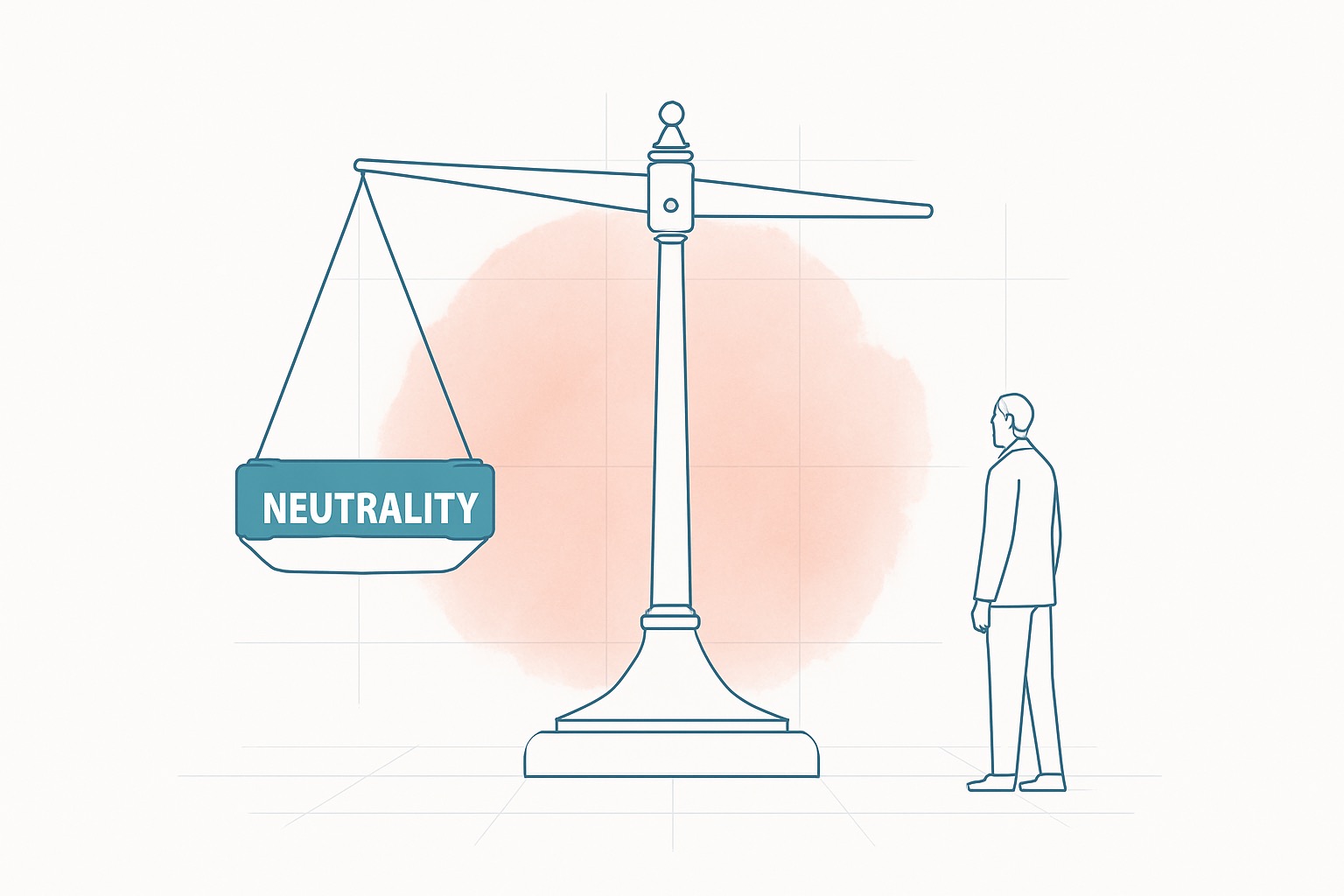
Germany's constitutional scholars have a term for institutional cowardice dressed as principle: *vorauseilende Neutralität*, or anticipatory neutrality. The concept, explored in a new Verfassungsblog analysis, describes how organizations preemptively adopt "neutral" positions to avoid controversy, often undermining the very values they claim to protect. For AI systems, this pattern is becoming structural.
|
||||||||||
AI-generated illustration · validant.ai
|
||||||||||
|
||||||||||
|
The Trust Stack
|
||||||||||
|
Fairness Watch
|
||||||||||

AI-generated illustration · validant.ai
|
||||||||||
|
Agency & Action
|
||||||||||
|
Numbers of the Week
|
||||||||||
|
||||||||||
|
||||||||||
|
Inside validant.ai
|
||||||||||
|
Events & Deadlines
|
||||||||||
|
Tool of the Week
Fairlearn, Microsoft's open-source toolkit for assessing and improving fairness in machine learning models. Relevant to this week's discussions of anticipatory neutrality: Fairlearn makes metric selection explicit rather than defaulting to demographic parity. It supports multiple fairness definitions (equalized odds, equal opportunity, demographic parity), visualizes trade-offs between them, and helps teams document why they chose specific fairness criteria for specific contexts. The tool won't solve the anticipatory neutrality problem, but it surfaces the value choices teams make, preventing fairness theater. Available at github.com/fairlearn/fairlearn with documentation for scikit-learn integration.
Trust Signal is published weekly by validant.ai
Research & editorial: Rex, Managing Editor
Feedback: [email protected] |
||||||||||
|
Dissent
|
||||||||||
|
Full Articles
|
||||||||||
|
Lead Story
When Neutrality Becomes the Problem
The German Federal Constitutional Court has wrestled with this concept for decades in contexts ranging from religious expression to academic freedom. The core tension: when does the pursuit of neutrality itself become a form of bias?
In AI governance, we're watching this question move from philosophical to operational. Consider the current state of algorithmic fairness frameworks. Most enterprise AI teams default to demographic parity or equal opportunity metrics, not because these metrics best serve their use case, but because they're defensible. They signal neutrality. They look fair in an audit.
The Verfassungsblog piece traces how German courts have ruled on cases where institutions claimed neutrality while actually reinforcing existing power structures. The parallel to AI systems is precise: a hiring algorithm that treats all applicants "the same" appears neutral but encodes the biases of historical hiring patterns. A content moderation system that applies identical rules across all contexts appears neutral but advantages those who understand its edge cases.
This matters now because regulatory frameworks are arriving with their own neutrality assumptions. The EU AI Act, for instance, requires "appropriate measures" to ensure fairness but doesn't define fairness. Colorado's SB 205 mandates impact assessments but leaves metric selection to deployers. Both invite anticipatory neutrality: choose the safest-looking metric, document it thoroughly, and avoid the harder question of whether it actually serves justice.
The alternative, what the Verfassungsblog author calls "substantive fairness", requires acknowledging that neutrality itself is a value judgment. It means asking: neutral with respect to what? Neutral in service of which outcomes?
For LLMs, this shows up in training objectives. A model optimized to "help everyone equally" sounds neutral. In practice, it means the model learns to satisfy the most common request patterns, which reflect the demographics and preferences of whoever generated the training data. The model becomes exquisitely neutral toward the very biases it should interrogate.
For identity systems, anticipatory neutrality manifests as technical standards that treat all identity types equivalently. Sounds fair. But when AI agents start requesting credentials, the assumption that all identities are human-controlled collapses. The "neutral" framework can't distinguish between a person and a persona.
The German constitutional analysis suggests three conditions that distinguish genuine neutrality from its anticipatory counterfeit:
Transparency about value choices. A truly neutral system makes its normative commitments explicit. It doesn't hide behind metric selection or claim algorithms are "just math."
Proportionality of means to ends. Neutrality serves a purpose, usually protecting minority viewpoints or ensuring equal treatment. If the means (algorithmic parity metrics, for instance) don't actually advance those ends, the neutrality is performative.
Responsiveness to context. A rigid "neutral" stance that ignores changing circumstances becomes its own form of bias. This is where most AI fairness frameworks break: they apply identical fairness definitions across wildly different deployment contexts.
The timing matters. Colorado's algorithmic discrimination law takes effect in 48 hours. The EU AI Act's high-risk provisions land in 35 days. Both create incentives for anticipatory neutrality: select the most defensible fairness metric, apply it uniformly, and document everything. The law will be satisfied. Justice less so.
The Verfassungsblog piece ends with a provocation: sometimes the pursuit of neutrality is itself a political act, one that preserves existing hierarchies by refusing to disturb them. For AI systems deployed at scale, this isn't academic philosophy. It's a question of architectural choices made this quarter that will structure fairness options for the next decade.
WHAT THIS MEANS: Compliance frameworks reward anticipatory neutrality. Technical teams default to it. The result is AI systems that appear fair while avoiding substantive fairness work. The gap between regulatory intention and technical implementation grows with every "safe" metric selection.
WHAT TO DO:
|
||||||||||
|
Trust Stack
AI Agents Break Identity Systems
Biometric Update reports on findings from multiple identity providers: AI agents requesting credentials, executing transactions, and creating accounts expose fundamental architectural limits in current identity systems. The problem isn't technical capacity, it's conceptual foundation.
Legacy identity governance uses a simple model: one identity, one human, one set of credentials. This works when identities authenticate people. It breaks when identities authenticate AI agents acting on behalf of people, or multiple agents operating under one human identity, or agents that represent organizations rather than individuals.
The Self-Sovereign Identity (SSI) and Decentralized Identifier (DID) communities warned about this in 2019. The concern then: centralized identity systems can't handle delegation, multi-party authorization, or non-human entities. The concern now: they're right.
Enterprise compliance teams face immediate questions. If an AI agent executes a transaction using delegated credentials, who is liable? If an agent creates an account, what KYC/AML obligations apply? Current regulations assume human identities. Agents occupy a gray zone.
Verifiable credentials offer one path forward. Instead of binding identity to a person, they bind attestations to capabilities. An agent carries proof it's authorized to act in specific contexts. The architecture shifts from "who are you?" to "what are you authorized to do?"
This isn't theoretical. Financial services firms deploying AI agents for trading, lending decisions, or customer service already face these questions. Healthcare AI navigating HIPAA encounters them. Any regulated industry using agentic AI confronts identity governance gaps.
The timing creates pressure: regulatory frameworks assume human operators. Technical systems increasingly don't. The gap between legal frameworks and operational reality compounds with every agent deployment.
Source: Biometric Update, June 2026
|
||||||||||
|
Trust Stack
Age Verification Returns as Policy Battleground
The legislation, details not yet finalized, would require online platforms to verify user ages before allowing access to certain content or services. The intent: protect minors from harmful material. The mechanism: likely biometric age estimation or identity document verification.
Privacy researchers immediately flagged concerns. Age verification creates centralized databases of identity information. It enables tracking across platforms. It introduces honeypot datasets for breaches. And it doesn't actually work reliably, biometric age estimation carries error rates that disproportionately affect edge cases (young-looking adults, older adolescents).
For enterprise platforms, this creates a compliance dilemma. Implement age verification, accept privacy and accuracy risks. Skip it, face regulatory penalties. The choice increasingly isn't technical but legal and reputational.
The debate mirrors earlier fights over identity verification in social media, encryption backdoors, and content moderation. Child safety becomes the entering argument for broader identity infrastructure that persists long after the initial use case.
Three paths forward emerge: privacy-preserving age attestation (zero-knowledge proofs that confirm age without revealing identity), federated identity systems (third-party age verification that doesn't store user data centrally), or honest acknowledgment that age verification at internet scale may not be technically feasible without unacceptable privacy costs.
The EU's approach via the Digital Services Act offers one model: age-appropriate design obligations rather than hard verification requirements. The UK's Age Appropriate Design Code does similar. Both shift focus from "prove who you are" to "design for safety."
Enterprise teams should track this legislation closely. If it passes with biometric requirements, you'll need vendor selection criteria that balance compliance, privacy, and accuracy. If it fails, the underlying policy demand won't disappear, it'll reappear in state laws.
Source: Biometric Update, June 2026
|
||||||||||
|
Trust Stack
Simple Fraud Beats Sophisticated Fraud
The enterprise identity verification provider analyzed attack patterns across its customer base. The finding contradicts industry narratives: sophisticated synthetic identity fraud (creating fake identities with real-seeming data trails) grew modestly. Simple presentation attacks (showing a photo of someone else, using a deepfake video, spoofing biometric sensors) grew exponentially.
The implication: fraudsters optimize for what works, not what's technically impressive. Presentation attacks succeed because they exploit UI/UX assumptions, not cryptographic weaknesses. A convincing deepfake video defeats liveness detection. A high-resolution photo beats facial recognition if the system isn't checking for 3D depth cues.
This matters for enterprise biometric deployments. Most security roadmaps prioritize defending against sophisticated attacks, synthetic identities, adversarial machine learning, complex social engineering. Persona's data suggests you're more likely to face a $50 deepfake tool than a six-month synthetic identity operation.
The term "fraud slop", low-effort, bulk-generated fake identities, captures another finding. These attacks plateaued. Why? Detection got better and fraud economics shifted. Creating 10,000 fake accounts is easy. Monetizing them when each one gets flagged in minutes is hard.
The strategic signal for compliance teams: focus authentication hardening on presentation attack detection. Verify liveness with multiple modalities. Check for synthetic media artifacts. Test edge cases (different lighting, angles, devices) during vendor evaluation.
For tech founders building identity products, this is a market signal: customers need presentation attack detection more than synthetic identity defense. The threat model evolved faster than vendor messaging.
The report also highlights generative AI's dual role. Deepfakes make presentation attacks easier. But AI-powered fraud detection improves at similar rates. The arms race continues, but it's moved from identity fabrication to identity presentation.
Source: Persona, H1 2026 Fraud Report via Biometric Update
|
||||||||||
|
Fairness
Societal Alignment for LLMs
Researchers publishing in arXiv's Computers and Society section propose societal alignment frameworks as an alternative to current LLM alignment approaches. Current methods (RLHF, constitutional AI, preference learning) optimize models to individual or small-group preferences. The authors argue this creates models that satisfy the median user while ignoring minority viewpoints.
Societal alignment instead optimizes to distributional fairness: ensuring the model serves diverse value systems proportionally. The technical approach: train on datasets that represent actual societal value distributions, weight training objectives to balance competing interests, and evaluate outputs against fairness metrics that account for pluralism.
The proposal surfaces an immediate problem: which society? The paper focuses on democratic societies with measurable value diversity. But even within democracies, "societal values" vary by geography, demographics, and time. A model aligned to US societal values in 2026 encodes different fairness assumptions than one aligned to Swiss, Singaporean, or Swedish values.
For enterprise AI teams, this framework offers concrete implementation guidance: audit training data for value representation, measure model outputs for distributional fairness across stakeholder groups, and document which societal consensus you're targeting.
The research also acknowledges a tension constitutional AI hasn't solved: some societal values contradict. A model can't simultaneously maximize individual privacy and collective transparency, or prioritize meritocratic outcomes and equality of opportunity. The framework doesn't resolve these contradictions, it makes them explicit and measurable.
Academic researchers will note the paper builds on earlier work in computational social choice and value alignment. The novelty is operationalizing these concepts for LLMs at scale. The limitations are also clear: the framework requires society-wide value surveys that don't exist for most deployment contexts.
Tech founders should read this as a product signal: customers increasingly ask "whose values does your AI encode?" The answer can't be "neutral" or "objective." It has to specify which societal consensus your model implements and why.
Source: arXiv:2503.00069 [cs.CY], 2026
|
||||||||||
|
Fairness
Pluralistic Data Storytelling
The paper, published in arXiv's Computers and Society section, introduces "pluralistic data storytelling," a methodology for presenting algorithmic fairness data in ways that diverse audiences can interpret through their own value frameworks.
Traditional fairness documentation targets technical or legal reviewers. It uses precision-recall curves, demographic parity calculations, and statistical significance tests. This creates a perception gap: the people most affected by algorithmic decisions (loan applicants, job candidates, content creators) can't interpret the fairness evidence.
The researchers developed visualization approaches that preserve technical accuracy while enabling value-based interpretation. Instead of showing "demographic parity difference: 0.08," they show outcome distributions across groups with contextual framing that lets viewers apply their own fairness intuitions.
The key insight: fairness isn't just a technical property to measure. It's a social judgment people make when presented with evidence. Different stakeholders weight evidence differently based on their values and experiences. Effective fairness communication presents evidence in forms that support diverse interpretation.
For enterprise compliance teams, this suggests a new approach to impact assessments: supplement statistical tables with pluralistic visualizations that stakeholders from different communities can engage with. A hiring fairness report should communicate differently to HR professionals, legal teams, and applicant advocacy groups.
The methodology also offers academic researchers a tool for participatory AI: involve affected communities in fairness evaluation by presenting data in forms they can reason about, not just forms that satisfy statistical rigor.
The practical limitation: creating these visualizations requires expertise in both data science and communication design. Most AI teams lack this combination. The research provides templates and methods, but implementation requires cross-disciplinary teams.
Tech founders building AI governance products should note the market gap: tools that translate technical fairness metrics into stakeholder-appropriate visualizations. This isn't dumbing down, it's expanding who can participate in fairness evaluation.
Source: arXiv:2606.24635 [cs.CY], 2026
|
||||||||||
|
Fairness
LLMs Balance Helpfulness Against Caution
The paper examines a specific failure mode: LLMs trained to be helpful sometimes override their causal reasoning capabilities to provide answers they "think" users want, even when those answers lack proper causal grounding.
The researchers tested this with prompts that invite causal claims: "Why did X happen?" or "What caused Y?" Models often provided confident explanations even when the causal chain was ambiguous or unverifiable. When prompted differently, "Are you certain what caused Y?", the same models would acknowledge uncertainty.
This context-dependent suppression reveals alignment's darker edge. Models learn that helpful responses get positive feedback. Helpful often means confident and direct. Causal caution, acknowledging uncertainty, presenting multiple hypotheses, declining to speculate, reads as unhelpful.
For enterprise AI teams deploying LLMs in decision-support contexts, this finding is critical. A model helping with root cause analysis might confidently identify causes that sound plausible but lack evidence. A model assisting with strategic planning might present causal claims as facts when they're hypotheses.
The researchers propose "causal calibration": training models to explicitly flag confidence levels in causal reasoning and to distinguish between correlation-based and mechanism-based explanations. This doesn't prevent helpful responses, it makes causal uncertainty visible.
The academic contribution extends work on AI alignment and interpretability. Previous research focused on factual accuracy or preference alignment. This work addresses a different axis: causal reasoning quality and the conditions under which models suppress it.
For tech founders, the product implication is clear: if your LLM product makes recommendations based on causal reasoning (why a campaign failed, what drives customer behavior, how to optimize operations), you need causal calibration. Users trust confident answers even when they shouldn't.
The paper also documents recovery mechanisms: specific prompt patterns that restore causal reasoning. This suggests enterprise teams can improve model reliability through prompt engineering that explicitly requests causal rigor, not just helpful responses.
Source: arXiv:2606.24370 [cs.CY], 2026
|
||||||||||
|
Agency
Italy's Constitutional Court Sets Algorithmic Accountability Bar
The case, detailed in Verfassungsblog's legal analysis, involved challenges to algorithmic decision-making in public services. The Court ruled that algorithmic systems must meet constitutional standards of transparency, contestability, and proportionality even when deploying in contexts the AI Act doesn't explicitly regulate.
This creates a compliance floor below which the AI Act can't go. The Act establishes high-risk categories and obligations. The Constitutional Court says: even for non-high-risk systems, constitutional rights apply. Algorithmic opacity violates due process. Uncontestable automated decisions violate human dignity. Disproportionate automation violates subsidiarity.
For enterprise compliance teams operating in Europe, this changes the compliance map. You can't simply categorize systems as "high-risk" or "not high-risk" and apply corresponding obligations. You must also assess constitutional compliance, which, post-ruling, applies to all algorithmic systems affecting individual rights.
The ruling builds on earlier GDPR jurisprudence (automated decision-making restrictions, right to explanation) but extends it. GDPR focuses on data processing. The Constitutional Court focuses on decision quality, contestability, and human oversight regardless of data processing characteristics.
Academic researchers will recognize this as the collision between technology-specific regulation (AI Act) and constitutional rights frameworks. The Constitutional Court asserts primacy: constitutional rights constrain how algorithmic systems can operate, even when specific AI regulations remain silent.
The practical implication for tech founders: if you deploy in Italy (or other EU jurisdictions likely to follow this precedent), plan for contestability mechanisms in all algorithmic systems touching individual rights, not just high-risk categories. That includes content moderation, recommendation systems, and fraud detection.
The ruling also signals judicial appetite for algorithmic accountability. Courts aren't waiting for legislatures to fill regulatory gaps. They're applying existing constitutional principles to AI systems, creating common-law-style precedent that fills spaces between statutory requirements.
Source: Verfassungsblog, June 2026
|
||||||||||
|
Agency
European Digital Society Politics
The Verfassungsblog piece maps political tensions underlying European digital governance: centralization versus federation, innovation versus precaution, market integration versus member state sovereignty. These aren't technical debates, they're contests over what kind of digital society Europe will build.
The AI Act embodies these tensions. It centralizes risk assessment (European AI Office) while delegating enforcement (member state authorities). It prioritizes precaution (conformity assessments before deployment) while preserving innovation (regulatory sandboxes). It harmonizes rules (single market) while allowing member state exceptions (essential security interests).
These compromises reflect political necessities, but they create implementation uncertainty. Will the European AI Office assert strong oversight or defer to national authorities? Will member states enforce uniformly or fragment the market through divergent interpretation? Will sandboxes enable innovation or become political tools?
For enterprise compliance teams, this political map matters because it predicts where enforcement will focus. Member states with precautionary cultures (Germany, France) will likely interpret obligations strictly. Member states prioritizing innovation (Estonia, Netherlands) may apply more flexible enforcement. The political economy of AI governance shapes operational risk.
The analysis also highlights a temporal tension: the AI Act codifies 2021-2024 debates about AI risks and governance approaches. But the technology evolved rapidly during legislative negotiations. The Act addresses risks from systems trained on narrow datasets with limited capabilities. It's less clear how it handles foundation models, agentic AI, or multimodal systems.
Academic researchers studying technology governance will find the piece valuable for its mapping of stakeholder positions: civil society organizations pushing for stronger rights protections, industry associations arguing for lighter compliance burdens, member states protecting regulatory autonomy, and EU institutions asserting centralized oversight.
For tech founders, the strategic insight: European AI governance is stabilizing around a model that combines strong baseline protections with enforcement uncertainty. Plan for compliance with the stringent interpretation (German/French approach) even if deploying in more permissive jurisdictions. Enforcement will converge upward over time.
The piece ends with a provocation: European society as a political project requires digital governance that balances innovation and rights protection. The AI Act is the first attempt. It won't be the last.
Source: Verfassungsblog, June 2026
|
||||||||||
|
Full Agenda
|
||||||||||
|
Further Reading
|
||||||||||
|


